In addition to that, there are five major long-distance Railway stations in Delhi besides several important junctions that handle sizeable passenger traffic. The following are ten main railway stations in and around Delhi that are usually considered top ones with regard to size, connectivity, and importance.
Major Railway stations in Delhi
New Delhi Railway Station (NDLS)
New Delhi Railway Station (NDLS) serves as the primary railway hub in Central Delhi, This is the largest and busiest Railway stations in Delhi, Trains for almost all regions of India are served from here.

Construction began in 1926 with a single platform, evolving through inaugurations in 1931 and 1956, followed by major upgrades for the 1982 Asian Games, 2010 Commonwealth Games, and a new 9,000 m² building in 2009 that expanded platforms from 12 to 16.
Ongoing revamps include air concourses, modern escalators, elevators, and expanded waiting areas for better passenger flow.
Old Delhi Railway Station / Delhi Junction (DLI)
Old Delhi Railway Station, also known as Delhi Junction (DLI), is the oldest Railway stations in Delhi, established in 1864. Serving many north and east-bound trains and heavy suburban traffic.
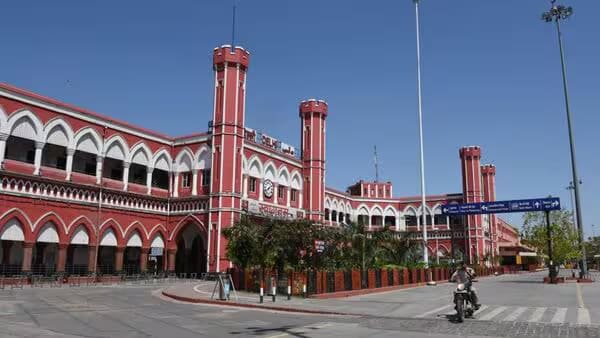
It originally served trains arriving from Calcutta and was built by the British colonial government with an architectural style inspired by the nearby Red Fort, featuring a red sandstone façade and Mughal-British colonial design elements. The current building opened in 1903 and initially had just two platforms serving about 1,000 passengers.
It was the primary railway hub of Delhi until the New Delhi Railway Station was built in 1926. The station remains one of the busiest in India with its rich historical and architectural significance reflecting over 150 years of railway heritage.
| Sub-Category | Details |
|---|---|
| Location | Chandni Chowk, Old Delhi, Near Red Fort |
| Platforms & Capacity | 18 platforms (some merged for 24-coach trains), +250 trains daily, Busiest for northern/eastern India |
| Main Entrances | Main entrance (Platform 1 side), Kashmere Gate side (newer entrance added 1990s, near Platform 16) |
| Layout Connections | Platforms renumbered 2011 from main entrance; Pit lines for train washing; Red-brick Mughal-colonial architecture |
| Waiting & Retiring Facilities | AC/non-AC waiting rooms/halls (₹10/hr adult, ₹5/hr child), Retiring rooms (₹250/12hrs, ₹450/24hrs) |
| Food & Essentials | Food stalls, restrooms, phone charging areas on platforms |
| Cloak & Support | Cloak rooms available; Police/security presence for safety. |
| Security & Technology | Safe for late/early trains with police officials; computerized reservation systems. |
| Metro Connectivity | Chandni Chowk (Yellow Line, 5-7 min walk from Gate 3); Lal Quila (Violet, 1.5 km); Kashmere Gate (2 km) |
| Road Connectivity | Buses from Anand Bus Terminal/Dwarka; Autos/cycle rickshaws; Parking facilities |
| Additional Tips | Walk/metro to avoid traffic; Check live status apps; Historic hub since 1864 |
Hazrat Nizamuddin Railway Station (NZM)
Hazrat Nizamuddin Railway Station (NZM) in South Delhi, named after the 14th-century Sufi saint Nizamuddin Auliya, opened around 1926 as part of the Indian Railways network under Northern Railway’s Delhi division.

Developed in the early 2000s and significantly revamped in 2019 to ease congestion at New Delhi Station, it now features modern upgrades like digital boards, escalators, lifts, green roofing, vacuum flooring, and vibrant murals while blending Mughal-inspired architecture with contemporary design.
It forms a key multi-modal hub near the Nizamuddin Dargah, with direct Pink Line metro links. Inter-city terminal and principal departure point for south and westbound long-distance trains, near Sarai Kale Khan and Humayun’s Tomb.
| Sub-Category | Details |
|---|---|
| Location | South Delhi, between Ring Road and Mathura Road, Part of Sarai Kale Khan multi-modal hub; 7 km south of New Delhi Station |
| Platforms & Capacity | 8 platforms (connected by overbridge), +250 trains daily including Rajdhani to Bengaluru, Chennai, Mumbai; 360,000+ passengers/day |
| Layout Connections | Platforms linked via foot overbridge, escalators, lifts; entry from Mathura Road (PF1) and MG Road gates; administrative/waiting areas on ground level. |
| Main Entrances | Mathura Road facing (PF1, display boards), MG Road side; Parking, ATMs, porters, police desk at entries |
| Waiting & Retiring Facilities | Upper-class hall, AC/non-AC waiting rooms (ladies/general/first class), Retiring rooms/dormitory (₹100+ via IRCTC, 12-48 hrs) |
| Food & Essentials | Cafeterias, Railway canteens, Water vending/RO systems, ~300 steel benches |
| Cloak & Support | Cloak room available; Wheelchair assistance, baby feeding, tourist info |
| Security & Technology | CCTV, marshals, Delhi Police at gates; digital boards, free Wi-Fi, sanitation helpline, vacuum flooring on PF2/3 |
| Metro Connectivity | Sarai Kale Khan Nizamuddin (Pink Line, direct link); upcoming RRTS/HSR interchanges |
| Road Connectivity | Autos/taxis/Ola/Uber lanes, premium parking, bus stand to ISBT Sarai Kale Khan |
| Airport Link | Via Pink Line metro or taxis (20-30 min to IGI) |
| Additional Tips | Platform tickets required; Check apps for Rajdhani schedules; Clean with green roofing, murals, waste segregation |
Anand Vihar Terminal (ANVT)
Anand Vihar Terminal (ANVT) in East Delhi, announced in 2003 to decongest major Railway stations in Delhi like New Delhi and Old Delhi, had its foundation stone laid on January 25, 2004, by then Railway Minister Nitish Kumar. A newer large terminal in East Delhi, important for trains toward Uttar Pradesh and Bihar and integrated with the Anand Vihar ISBT and metro.

After multiple delays, Phase I—with a two-storey structure, three initial platforms, coach yard, and feeder lines costing ₹850 million—was inaugurated on December 19, 2009, by Mamata Banerjee and Delhi CM Sheila Dikshit, with regular trains starting March 10, 2010.
A 2010 stampede at New Delhi Station prompted permanent transfer of long-haul east-bound trains here, expanding to 7 platforms across 42 hectares as a multi-modal hub integrated with metro, ISBT, and upcoming RRTS.
| Sub-Category | Details |
|---|---|
| Location | East Delhi (Anand Vihar), near NH-24; Integrated with Anand Vihar ISBT, Metro (Blue Line), and Upcoming RRTS; 42 hectares site. |
| Platforms & Capacity | 7 platforms (Phase I: 3 initial, expanded); 100+ east-bound trains to UP, Bihar, West Bengal; 100,000+ passengers daily |
| Layout Connections | Two-storey structure, coach maintenance yard, feeder lines to Sahibabad; Platforms for long-distance and suburban trains |
| Main Entrances | Main entrance with ticketing, parking; Accessible via metro footbridge and bus terminal linkage |
| Waiting & Retiring Facilities | Waiting halls, retiring rooms; Modern infrastructure with food outlets, medical aid |
| Food & Essentials | Food courts, vending machines, ATMs; Clean facilities |
| Cloak & Support | Cloak rooms, porters, tourist info; Wheelchair access |
| Security & Technology | CCTV surveillance, digital displays; Electrified tracks |
| Metro Connectivity | Anand Vihar (Blue Line, direct); Integrated multi-modal hub |
| Road Connectivity | NH-24 access, buses from ISBT, taxis/autos; Ample parking |
| Airport Link | Via Blue Line metro or Taxis (30-45 min to IGI) |
| Additional Tips | Decongests NDLS/DLI; Check apps for schedules; Phase II upgrades ongoing |
The Delhi Sarai Rohilla Railway Station (DEE)
Delhi Sarai Rohilla Railway Station (DEE), established in 1872, is one of Delhi’s historic Railway stations in Delhi located approximately 4 km from Old Delhi Railway Junction. It is an older and important terminal, mainly for trains toward Rajasthan, Gujarat, Haryana, Punjab, and Mumbai.

Originally built on the metre-gauge line connecting Delhi to Jaipur and Ajmer, it was situated just outside the old walled city of Shahjahanabad. Over time, the station evolved into an important terminus for trains heading toward Haryana, Punjab, Rajasthan, Gujarat, and western and northern India.
The metre-gauge tracks were progressively converted to broad gauge starting in 1991, and by 2006 all metre-gauge operations ended, making Sarai Rohilla a key terminus for broad gauge trains.
| Category | Details |
|---|---|
| Location | Approx 4 km from Old Delhi Railway Station; Near Shahjahanabad (Old Delhi) |
| Platforms & Capacity | 5 platforms; Handles broad gauge trains after metre gauge conversion completed by 2006 |
| Layout | Platform 1-5 accessed via foot overbridges; station building with booking offices and waiting areas |
| Entrances | Main entrance on Ring Road side; Separate exit points with parking |
| Facilities | Ticket reservation counters, waiting rooms, cloak rooms, food stalls, parking, restrooms |
| Connectivity | Bus and taxi stand near entrance; Closest metro stations are Shastri Nagar and Kishan Ganj (2-3 km) |
| Redevelopment Plans | Ongoing modernization to improve amenities and better integration with city transport |
Other Important key junctions/ Railway stations in Delhi:
Delhi Cantt Railway Station: A major railway station in West Delhi with many long-distance trains running, especially for Rajasthan and western India.
Shakur Basti Railway Station (SSB) : Important for freight and for some passenger and long-distance train halts in northwest Delhi.
Delhi Shahdara Junction (DSA) : This is an important junction for East Delhi and also the areas of UP that fall nearby. It is well connected with good road and metro facility for local passenger traffic.
Palam Railway Station (PM) : A useful suburban and passenger stop in Southwest Delhi, near the airport side. It serves local and a few long-route trains.
Delhi Safdarjung Railway Station (DSJ): This station falls into the relatively small category but is at a strategic point in South Delhi, utilized for passenger, special, and rarely for VIP trains.
Railway stations in Delhi with Code : At-a-glance table
New Delhi Railway Station, Old Delhi Railway Station, Hazrat Nizamuddin, Anand Vihar Terminal, and Delhi Sarai Rohilla are major railway stations in Delhi that facilitate a well-connected rail network, serving millions of passengers every year.
Each has its own history, specialized facilities, and strategic connections, serving different routes and passenger profiles. They each work together to provide easy connectivity between Delhi and the rest of India, enabling Delhi to be a vital transportation hub, changing to meet modern needs for safety, convenience, and efficiency.


Be First to Comment