Parks in Delhi are wonderful places to relax and enjoy picnics, often with the family, a great attraction for residents who seek to escape the city’s noise and explore green oases within the metropolis. Most of these parks come with historical importance, play facilities, and natural beauty, serving the interest in the tourism of Delhi and in entertaining facilities.
We have divided these parks into 3 main categories:
Lodhi Garden, spanning 90 acres in central Delhi, blends historical 15th-century tombs from the Sayyid and Lodi dynasties with lush landscapes designed in 1936, serving as a vital urban green oasis amid the city’s bustle. It is the best highlighting heritage monuments with natural lawns, and it will be highly helpful for photo shooters.
Lodhi Garden : One of the Historical Parks in Delhi
Aspect
Details
Location
Lodhi Estate, New Delhi; near Jorbagh and Lok Kalyan Marg Metro Stations
Extremely well-kept, regular landscaping, clean and Patrolled; Sustainable practices like water conservation
Safety
Patrolled by security, safe for families/joggers; Fenced wildlife areas
Activities
Jogging, walking, picnics, cycling, birdwatching, photography, family games, yoga.
Biodiversity
Over 100 bird species, diverse trees/plants, urban wildlife corridor purifying air and moderating heat.
Community
Popular for daily jogs, family outings, social gatherings; Fosters local fitness groups and events.
Nehru Park New Delhi
Nehru Park, spanning about 80-85 acres in Delhi’s upscale Chanakyapuri diplomatic enclave, offers vast manicured lawns, shaded tree groves, and cushioned walking tracks as a serene urban escape for joggers, cycling tracks, families, and cultural events like music concerts and yoga sessions.
Nehru Park : One of the Historical Parks in Delhi
Aspect
Details
Location
Chanakyapuri, near Ashoka Hotel, Race Course Road, and Lok Kalyan Marg Metro Station (Yellow Line)
Timings
5:00 AM–8:00 PM daily, year-round; Busiest in early mornings/evenings
Best-maintained; clean paths, regular upkeep, Though minor issues noted in some areas.
Safety
Safe for solo visitors, families, and night use with lighting; well-patrolled in embassy area.
Activities
Jogging/walking, yoga, picnics, badminton, kids’ play, birdwatching, cultural events (concerts, art shows, marathons).
Biodiversity
Diverse birds, squirrels, varied plant/tree species supporting urban wildlife.
Community
Popular for morning walkers, families, fitness groups, events; Attracts locals and tourists
Sunder Nursery
Sunder Nursery, a 90-acre heritage park in central Delhi established in 1913 and revitalized in 2018 through collaborations between CPWD, ASI, and Aga Khan Trust for Culture, features 15 restored monuments—including six UNESCO World Heritage sites—alongside themed gardens, microhabitats, and over 300 tree species, creating a serene ecological and cultural oasis near Humayun’s Tomb.
Sunder Nursery : One of the Historical Parks in Delhi
Hosts events, school visits, markets; Attracts families, nature lovers, over 1 million annual visitors for education and recreation.
The Garden of Five Senses
The Garden of Five Senses, a 20-acre sensory park in South Delhi’s Said-ul-Ajaib village near Mehrauli, opened in 2003 to engage all five senses through themed landscapes, sculptures, aromatic plants, textured paths, water features, and edible herbs amid rocky terrain and lush greenery.
Garden of Five Senses: One of the Important Parks in Delhi
Aspect
Details
Location
Said-ul-Ajaib, Saket, near Mehrauli; Nearest metro Saket (Yellow Line) or Qutub Minar
Birds (mynas, sparrows, migrants), butterflies/bees, diverse flora/fauna habitats.
Community
Hosts festivals, art/food events, family outings; Popular for relaxation, education, annual visitors for shows.
Family-Friendly Spots
Deer Park
Deer Park, a 60-acre lush green oasis in South Delhi’s Hauz Khas area managed by the Delhi Development Authority, features a dedicated enclosure for spotted deer (Chital), alongside rabbits, vibrant rose gardens, and proximity to historic Hauz Khas Lake and Fort, offering a serene retreat for nature lovers amid urban bustle.
Deer Park : Family Friendly Parks in Delhi
Aspect
Details
Location
Hauz Khas Fort Road, South Delhi; Near Hauz Khas Lake/Fort/Village. Closest metro: Hauz Khas or IIT (Magenta/Yellow Lines)
Timings
5:00-6:00 AM–7:00-8:00 PM daily (shorter in winter Oct-Mar)
Popular for families, couples, joggers, photographers; events/picnics; attracts locals/tourists.
Buddha Jayanti Park
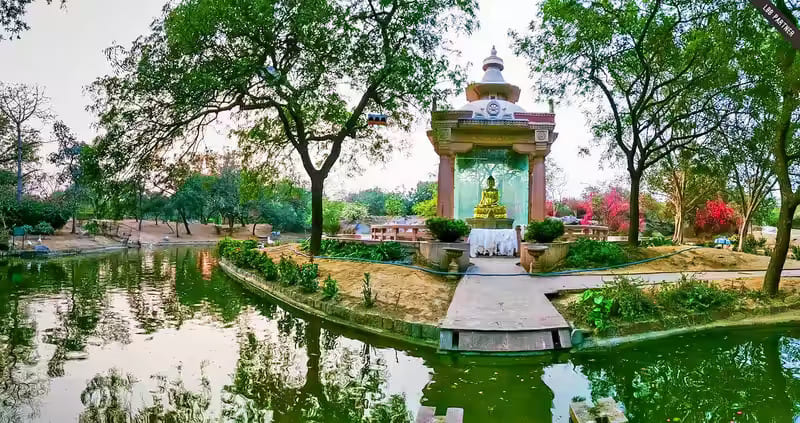
Buddha Jayanti Park, a serene 25-acre green space in central Delhi’s Ridge area created in the 1960s to commemorate Buddha’s 2,500th birth anniversary, centers around a towering 12-meter gold-plated Buddha statue gifted by the Dalai Lama, offering lush landscapes, meditation spots, and shaded paths as a peaceful urban retreat for reflection and nature immersion.
Buddha Jayanti Park : Family Friendly Parks in Delhi
Aspect
Details
Location
Vandemataram Marg, Central Ridge Reserve Forest; near Rajpath/Chanakyapuri, Metro: Central Secretariat (Yellow/Violet Lines)
Popular for locals’ walks, families, spiritual groups; events on Buddha Purnima.
Central Park Connaught Place
Central Park in Connaught Place serves as a vibrant 4.15-hectare green oasis amid Delhi’s bustling commercial hub, rebuilt in 2006 atop the Rajiv Chowk Metro station with manicured lawns, fountains, and crisscrossing pathways, hosting cultural events and providing a refreshing retreat for shoppers and locals.
Central park, CP : Family Friendly Parks in Delhi
Aspect
Details
Location
Connaught Place (Rajiv Chowk), New Delhi; Above Rajiv Chowk Metro (Yellow/Blue Lines)
Timings
6:00 AM–6:30 PM or 8:00 PM daily;
Amenities
Amphitheater, restrooms, benches, picnic areas, paid parking, vendors for snacks.
Water Resources
Fountains, meandering water streams/channels.
Vegetation
Lush lawns, colorful flower beds/shrubs, tall trees providing shade.
Maintenance
Well-manicured despite crowds/littering; Regular upkeep by NDMC.
Safety
Safe daytime for families; Central location with crowds
Activities
Walking/jogging, cultural events/concerts/festivals, relaxation/picnics.
Biodiversity
Urban birds, butterflies amid greenery;
Community
Hub for locals/families, events drawing crowds; cultural hotspot.
Japanese Park : Swarn Jayanti Park
Swarn Jayanti Park, popularly known as Japanese Park, spans over 200 acres in northwest Delhi’s Rohini sector-10 as a vast green lung developed by the Delhi Development Authority, featuring Japanese-inspired manicured gardens, two serene lakes, jogging tracks, and seasonal flower festivals that draw crowds for recreation and events.
Japanese Park : Family Friendly Parks in Delhi.
Aspect
Details
Location
Sector 10, Rohini, Northwest Delhi; Metro: Rohini West Metro (Red Line)
Timings
Sunrise to sunset daily (approx. 5:30 AM–7:00 PM);
Amenities
Jogger’s circle, children’s play area, skating rink/arena, gaming zone, picnic spots, large parking.
Water Resources
Two serene lakes (one 10 acres with fish/water birds), fountains, paddle boating.
Peacocks, swans, water birds, fish, butterflies amid greenery.
Community
Neighborhood retreat for joggers/families; hosts fairs, exhibitions, concerts.
Adventure Parks
Aravalli Biodiversity Park
Aravalli Biodiversity Park spans nearly 700 acres on Delhi’s South Central Ridge near Vasant Vihar, transforming degraded mining pits infested with invasive weeds into a thriving native Aravalli ecosystem since the early 2000s, with over 1,000 plant species across 35 recreated communities like grasslands, thorn forests, and wetlands, serving as a key site for conservation, education, and urban nature restoration.
Aravalli Biodiversity Park : Popular Parks in Delhi
Aspect
Details
Location
South Central Ridge, northwest of Vasant Vihar; Metro: Chhattarpur (Yellow Line)
Focus on school education, public awareness, citizen science; attracts researchers/nature lovers.
Indraprastha Park
Indraprastha Park, also known as Millennium Indraprastha Park, is an 80–85-acre green space developed in 2004 by the Delhi Development Authority on a reclaimed landfill along the Outer Ring Road near Sarai Kale Khan, featuring expansive lawns, gardens, and the prominent white Vishwa Shanti Stupa with a golden Buddha that make it a popular picnic and hangout spot for families and couples.
Indraprastha Park : Famous Parks in Delhi
Aspect
Details
Location
Block-A, Ganga Vihar, Outer Ring Road near Sarai Kale Khan and Hazrat Nizamuddin. Nearest metro: Sarai Kale Khan–Nizamuddin (Pink Line) / Indraprastha (Blue Line, short auto ride)
Timings
7:30AM–8:00 PM; (exact closing time may vary by season and gate)
Amenities
Children’s park/play area, amphitheatre for events, large central food court with multiple outlets, paved walking paths, lawns for picnics, seating, basic parking near entrances.
Water Resources
Landscape fountains and ornamental water features near the Shanti Stupa and garden zones; located close to the Yamuna floodplain.
Vegetation
Designed as a “mini forest” with extensive lawns, tree-lined mounds, bougainvillea and topiary gardens, fragrant and foliage gardens, and mixed ornamental planting providing shade and color.
Maintenance
Notable example of landfill-to-park restoration; Well-kept lawns and paths, though crowding and litter can affect cleanliness on weekends and evenings.
Safety
Considered fine for families and groups in daytime and early evening; Can feel isolated or more couple-centric in some corners after dark.
Activities
Picnics, evening strolls, jogging/walking, children’s play, casual photography, couple hangouts, cultural shows at the amphitheatre, visits to the Vishwa Shanti Stupa for quiet sitting and reflection.
Biodiversity
Urban park habitat supporting common trees, shrubs and lawn flora, with typical city birds (pigeons, mynas, parakeets) and small fauna using the greener pockets; more ornamental than wild-eco focused.
Community
Popular weekend picnic and evening outing spot for nearby neighborhoods; attracts families, school groups, and couples, with the Shanti Stupa area also used by visitors marking peace-related or spiritual occasions
These parks typically open early morning to evening, with free entry at most sites. They cater to diverse activities like jogging, yoga, and photography, suiting Delhi’s fast-paced lifestyle. Most of these parks offer good children’s play areas, but only a few have proper boating facilities.
Here is the comparison for all:
Park
Boating availability
Play area / swings for kids
Lodhi Garden
No formal public boating;
No dedicated large kids’ zone;
Nehru Park
No boating;
Has children’s play areas and open lawns suitable for kids’ games.
Sunder Nursery
No boating;
Has a dedicated children’s garden with swings and play structures.
Garden of Five Senses
No boating;
Limited as a formal kids’ park; more sensory/artistic spaces than swings.
Deer Park (Hauz Khas)
No regular boating
Basic play options on lawns;
Buddha Jayanti Park
No boating facilities mentioned;
Open lawns for kids to run/play but not a big dedicated swings playground.
Central Park, Connaught Place
No boating;
Very limited child-specific play equipment.
Japanese Park (Swarn Jayanti Park)
Yes – paddle boating on a large lake, a key attraction here.
Good children’s play area, including swings, slides and even skating zone.
Aravalli Biodiversity Park
No boating;
Focus on nature education, not swings;
Indraprastha Park
No boating;
Has a children’s park/play area with swings and play structures.
For boating with kids, Japanese Park (Swarn Jayanti) is clearly the best fit. For swings and structured play, Sunder Nursery’s children’s garden, Japanese Park, Nehru Park and Indraprastha Park are the strongest options.




Be First to Comment